10-Inch Collapsible Dobsonian: Big Views, Easy Storage
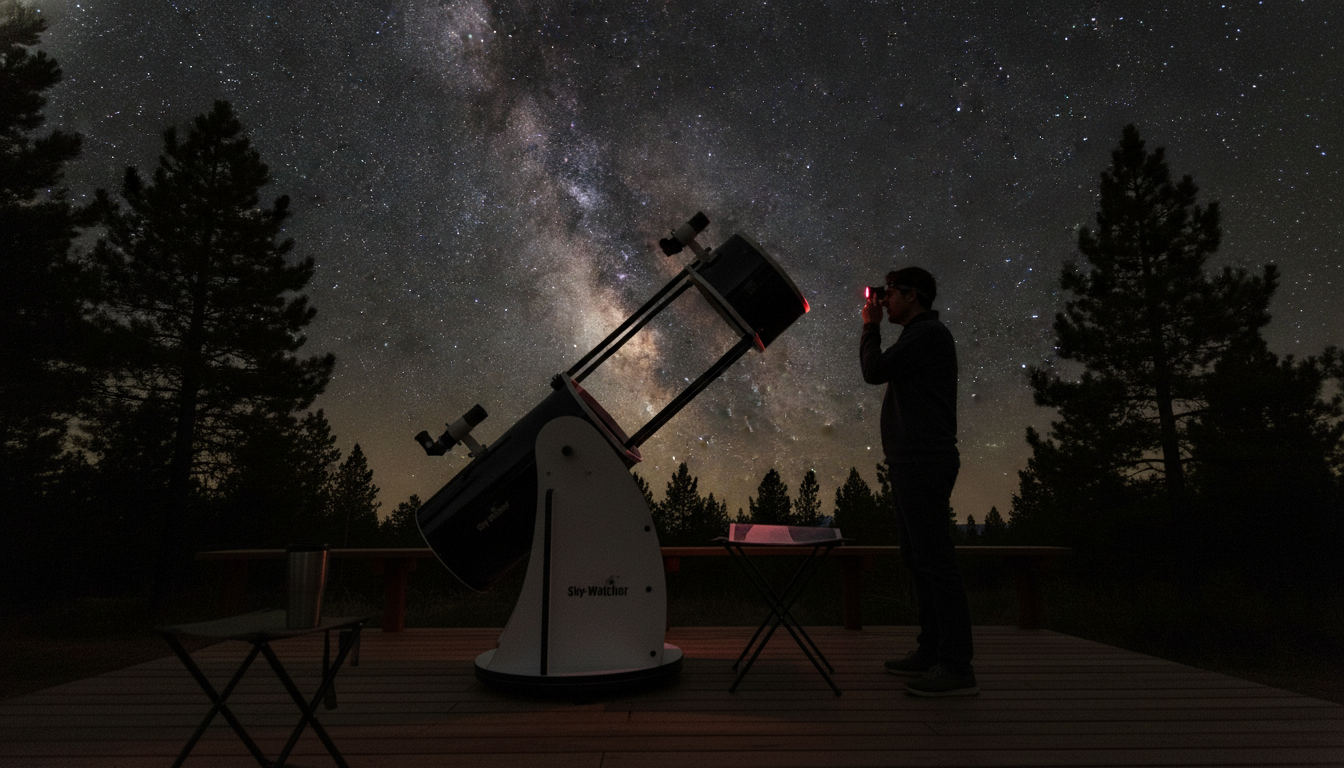
10″ Collapsible Dobsonian Telescope: Big-Aperture Viewing in a Compact Form
A collapsible Dobsonian pairs a large light-gathering mirror with a tube design that shortens for transport and storage. This format is popular for deep-sky observing because it delivers a bright image without the complexity of equatorial mounts. The 10″ class is often considered a sweet spot for serious visual astronomy: substantial reach on galaxies and nebulae, yet still manageable for many backyards and car trunks. For more guidance, see What Are The Pros And Cons Of The Dobsonian Telescope | ipl.org.
What “Collapsible” Changes (and What It Doesn’t)
A collapsible optical tube is designed to shrink down when you’re carrying it and extend to full length for observing. That simple change can make a big-aperture telescope feel far more practical for apartment closets, smaller vehicles, and quick trips to darker sites. For further reading, see COLLAPSIBLE DOBSONIAN SKY COMMANDER RETROFIT.
- A collapsible tube shortens the optical assembly for easier carrying and fitting into smaller vehicles or closets.
- The optical performance comes primarily from aperture and mirror quality; collapsing the tube mainly affects portability and setup workflow.
- Collapsible designs can be more exposed to stray light and dew; planning for a light shroud and dew control improves contrast on faint targets.
- Truss/strut mechanisms should lock firmly; stability matters for holding collimation and keeping stars tight at higher magnifications.
One practical tip: if you observe near porch lights or neighbors’ windows, a light shroud can feel like an “instant upgrade.” It reduces washed-out backgrounds and helps faint structures stand out instead of disappearing into glare. For broader lighting best practices, the International Dark-Sky Association has a clear overview of sensible outdoor lighting principles (IDA Lighting Principles).
Why a 10″ Dobsonian Is a Strong Visual Upgrade
A 10-inch Dobsonian often delivers the first truly “wow” views of deep-sky objects for many observers—bright enough to reveal texture and structure, but still simple to point and track by hand.
- A 10″ mirror gathers far more light than smaller beginner scopes, making globular clusters, planetary nebulae, and galaxies noticeably brighter and more detailed.
- More aperture supports higher useful magnification on planets and the Moon when atmospheric seeing cooperates.
- The Dobsonian base keeps operation intuitive: point, nudge, and observe, which helps new observers build skills quickly.
- For many observers, 10″ remains realistic to move in two pieces (tube and base) without special lifting gear.
Typical What-You-Can-See by Target Type (10″ under dark skies)
| Target type | What often stands out | Helpful tips |
|---|---|---|
| Moon | Sharp crater detail, rilles, mountain shadows | Use lower power near full Moon to reduce glare; add a neutral density or polarizing filter if needed |
| Planets | Jupiter bands and moons, Saturn’s rings and Cassini Division in good seeing, Mars surface markings near opposition | Let the scope cool to ambient temperature; collimate before pushing magnification |
| Star clusters | Rich open clusters; globulars begin to resolve into stars | Start at low power to frame, then increase power to darken sky background |
| Nebulae | Orion Nebula structure; brighter planetary nebulae show shape and contrast | A UHC/O-III filter can help on emission nebulae; avoid direct streetlights |
| Galaxies | Bright cores, dust lane hints on showcase objects | Use averted vision; seek darker sites for dramatic improvement |
Setup Basics: From Carrying to First Light
A little routine goes a long way with a big mirror. The goal is to protect alignment, let optics settle to temperature, and start with a comfortable, low-friction workflow.
For night-by-night sky highlights and timing (planet visibility, meteor showers, and seasonal constellations), NASA’s skywatching resources are a reliable reference (NASA What’s Up).
Collimation and Contrast: The Two Biggest Quality Multipliers
If you want a deeper walkthrough of reflector alignment, Sky & Telescope maintains a helpful set of collimation resources (Sky & Telescope Collimation).
Accessories Worth Considering (Without Overbuying)
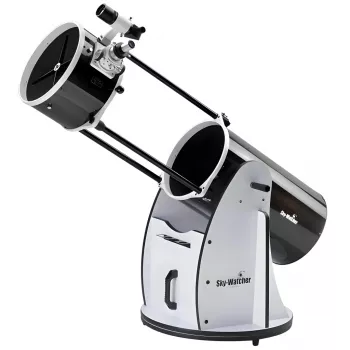
Featured Option: 10″ Collapsible Dobsonian Telescope
If the goal is deep-sky reach without committing to a permanently assembled, full-length tube, the 10″ Collapsible Dobsonian Telescope fits the “serious views, realistic storage” niche especially well.
Quick specs to confirm before checkout
| Detail | What to look for | Why it matters |
|---|---|---|
| Aperture | 10 inches (254 mm) | Controls light-gathering power and overall detail on faint objects |
| Tube design | Collapsible/strut with secure locks | Affects portability and how well alignment holds |
| Base motion | Smooth altitude/azimuth movement | Enables easy manual tracking at moderate-to-high magnification |
| Included accessories | Finder, eyepieces, collimation aid (if included) | Reduces extra purchases to get started |
Helpful Add-Ons for Longer, More Comfortable Sessions
- Nordic Rattan Leisure Single Sofa Chair – Solid Wood, Modern Fabric Design for a stable seated posture when scanning star fields or waiting for moments of steady seeing.
- Living Room Outdoor Family Shelter Tent as a windbreak and dew-reducer for longer nights outside (especially useful at darker sites where exposure is higher).
FAQ
Does a collapsible Dobsonian need collimation every time it’s set up?
It usually benefits from a quick check each session, especially after transport. A fast alignment touch-up can noticeably improve planetary sharpness and keep stars tight at higher magnification.
Is a 10″ Dobsonian too heavy for one person?
Many owners move it in two pieces (tube and base), which makes it manageable for a single person in most cases. Comfort depends on stairs, carrying distance, and vehicle height; a small hand truck can make setup far easier.
Can it be used for astrophotography?
It’s best suited for visual observing, where it excels. Simple phone photos of the Moon and brighter planets are doable, but long-exposure deep-sky imaging typically calls for a tracking mount and a different setup.













Leave a comment