UNI-T UTx318 Thermal Monocular for Low-Visibility Scans
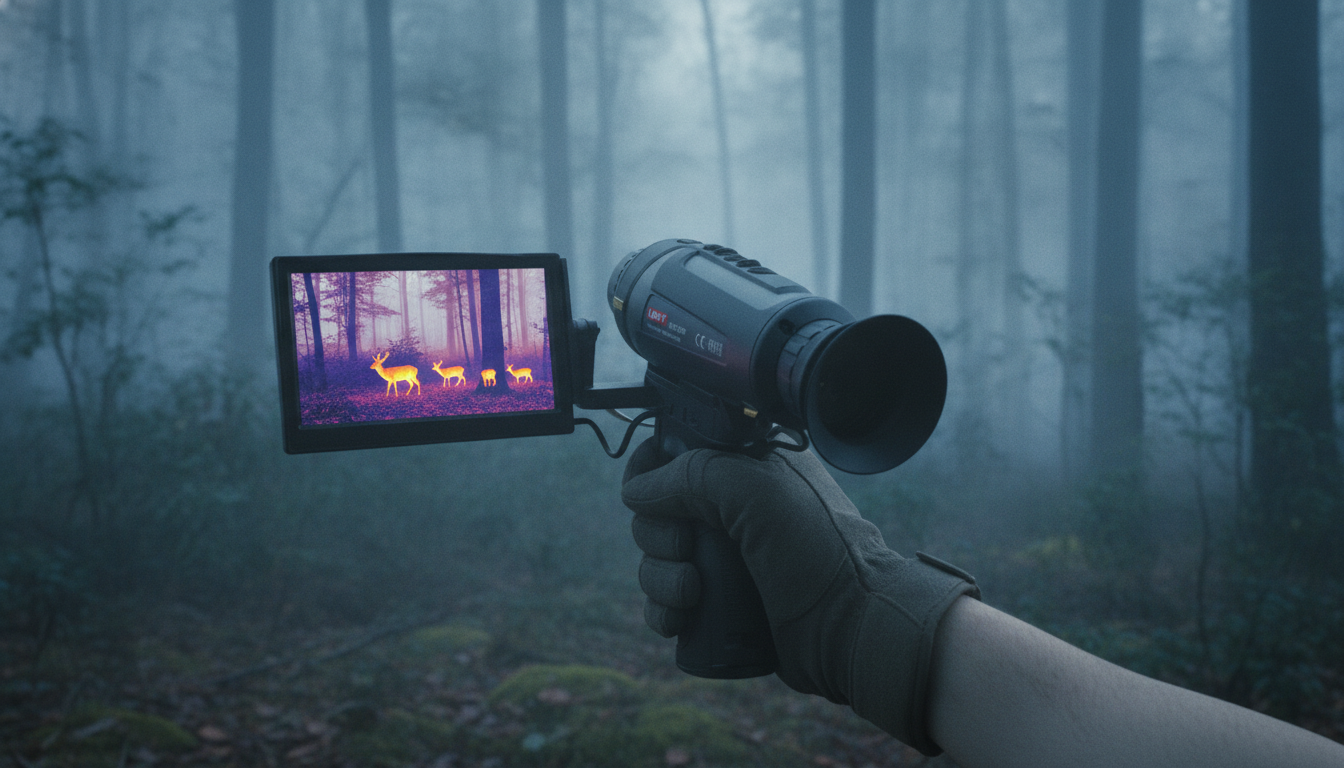
UNI-T UTx318 Thermal Imaging Monocular: Outdoor Awareness When Visibility Isn’t on Your Side
The UNI-T UTx318 Thermal Imaging Monocular is built for outdoor observation where light, fog, brush, and distance can make traditional optics struggle. By visualizing heat signatures instead of visible light, it helps spot people, animals, and warm objects more reliably during low-visibility conditions—while staying compact enough for pack-ready carry.
Thermal imaging works by detecting infrared radiation (heat) rather than amplifying ambient light. If you want a deeper technical overview, FLIR’s explanation is a helpful baseline: How thermal cameras work. For the broader science behind infrared on the electromagnetic spectrum, NASA’s overview is a solid reference: Infrared waves.
What a Thermal Imaging Monocular Helps You See
Thermal changes what “visibility” means outdoors. Instead of searching for outlines and colors, you’re scanning for temperature differences—often the quickest way to notice something living, recently running, or warmed by the sun.
- Detect heat signatures in darkness and challenging lighting where standard binoculars depend on ambient light.
- Improve awareness in fog, light rain, smoke, and partial vegetation where contrast is low.
- Reduce time spent scanning by highlighting warm targets against cooler backgrounds.
- Support safety checks around campsites, trails, property lines, and gear areas after sunset.
Highlights to Look For in the UTx318
Not all thermal viewers “feel” the same in the field. Small differences in clarity, smoothness, and controls can determine whether you quickly recognize a shape—or just see a bright blob.
- Thermal sensor and display clarity: affects how quickly shapes become identifiable rather than just “hot spots.”
- Lens and field of view: wider views help scanning; narrower views can help with distant target identification.
- Refresh rate and image stability: smoother updates help when panning and tracking moving targets.
- Color palettes and contrast tools: useful for separating targets from background temperatures.
- Digital zoom and focus behavior: helps check a signature after detection, but can reduce detail at higher zoom levels.
Quick checkpoints before purchase and first use
| Checkpoint | Why it matters outdoors | Practical tip |
|---|---|---|
| Field of view | Faster scanning in wooded or uneven terrain | Start wide to detect, then zoom only to confirm |
| Refresh and smoothness | Easier tracking while walking or sweeping | Pan slowly; let the image settle before judging detail |
| Palettes/contrast modes | Better separation in hot summers or cold winters | Use high-contrast palettes for detection; neutral palettes for identification |
| Controls and ergonomics | One-handed operation in gloves or cold weather | Assign commonly used functions (palette/zoom) if shortcuts exist |
| Battery strategy | Long nights and cold temperatures drain power faster | Carry a backup power option and keep batteries warm when possible |
Real-World Outdoor Scenarios Where Thermal Shines
Thermal is most valuable when your eyes are doing extra work—when you’re tired, the terrain is cluttered, or visibility changes minute to minute.
- Night trail checks: identify warm bodies ahead and avoid surprises on blind turns.
- Wildlife observation: detect animals resting in brush or moving along tree lines without visible-light illumination.
- Search and safety: locate a person or pet by heat signature when visibility drops.
- Camp perimeter awareness: quickly scan for movement around tents, vehicles, and gear.
- Property walks: spot warm engines or recent activity near entrances and paths.
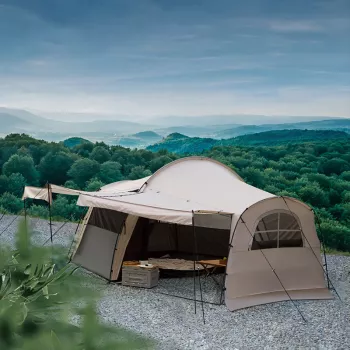
If your basecamp is a hub for family or group trips, pairing fast thermal checks with a comfortable shelter can make nights calmer. The Living Room Outdoor Family Shelter Tent adds space for gear organization and a predictable perimeter—useful when you’re scanning around vehicles, coolers, and entry points after dark.
Comfort, Carry, and Controls for Long Sessions
A thermal monocular can be “portable” and still be annoying to use if it’s top-heavy, fiddly, or hard to operate with cold hands. Small usability details matter most during extended scanning sessions.
- Grip and balance: stable handling reduces fatigue during extended scanning.
- Display comfort: a clear view with adjustable brightness helps when moving between dark woods and open areas.
- Button layout: reliable tactile controls matter when wearing gloves or when operating quietly.
- Startup and standby behavior: fast readiness is valuable for quick checks without draining power.
- Neck strap or pouch use: protects the lens and keeps it accessible when hands are busy.
For many users, the most practical setup is a simple routine: carry the monocular on a strap for quick access, use a protective pouch during brushy hikes, and keep a power plan for longer nights (especially in cold weather).
Getting Useful Results Fast
Thermal becomes more effective when you scan deliberately and interpret what you’re seeing—especially in environments full of “false positives” like sun-warmed rocks, exhaust heat, and campfire remnants.
Care, Storage, and Responsible Use
Featured In-Stock Gear
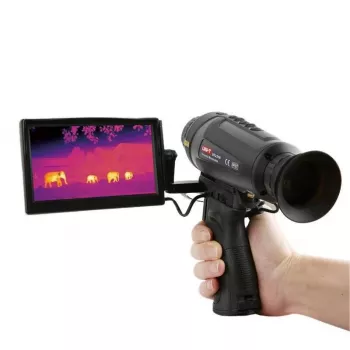
- UNI-T UTx318 Thermal Imaging Monocular – Your Ultimate Outdoor Observation Tool
- Living Room Outdoor Family Shelter Tent
FAQ
Can a thermal imaging monocular see through glass?
No. Standard window glass blocks long-wave infrared, so a thermal monocular typically shows reflections or the surface temperature of the glass itself, not what’s behind it. It can detect heat through open windows, doors, or other openings.
What is the practical difference between thermal imaging and night vision?
Thermal imaging detects heat signatures and works without ambient light, which makes it useful in total darkness and many low-visibility conditions. Night vision amplifies available light and can show more surface detail when there’s enough light, but it can struggle in very dark environments unless an IR illuminator is used.
Is it legal to use a thermal monocular outdoors at night?
It depends on where you are and what you’re doing. Many places allow possession and general outdoor use, but hunting regulations and rules in protected areas can be strict and vary by region, season, and species.













Leave a comment