4-Week Fit-at-Home Plan: Daily Workouts & Stretches
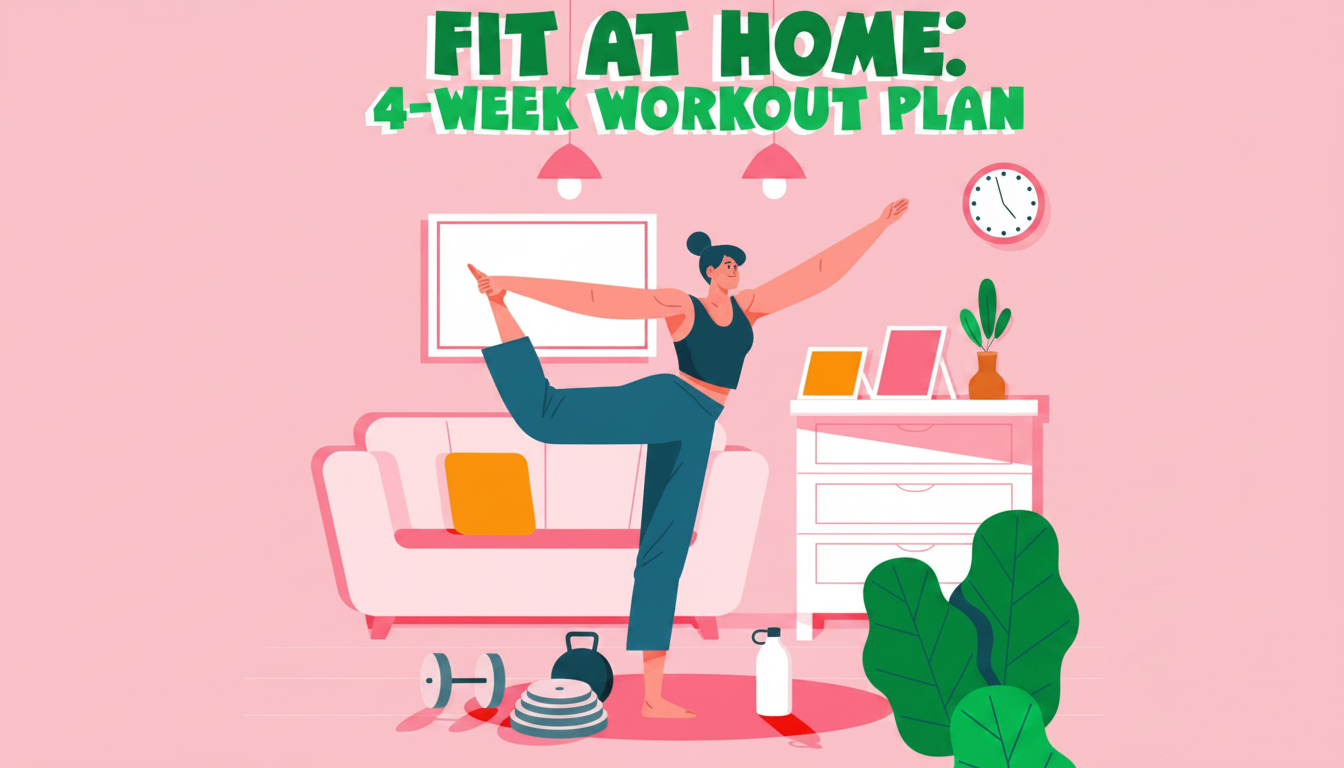
Fit at Home: A 4-Week Minimal-Equipment Workout Plan With Daily Workouts and Stretches
A simple, repeatable 4-week plan can remove the guesswork from home training—especially when time, space, and equipment are limited. This guide lays out a practical weekly rhythm, a progression approach across four weeks, and a daily flow that pairs strength, cardio, and mobility so workouts feel doable and recovery stays on track.
For general health targets, the CDC physical activity guidelines and the ACSM recommendations both support a mix of strength work and aerobic activity each week—exactly what this plan is designed to deliver in a small space.
Who This 4-Week Plan Works For
- Busy schedules: short sessions that still cover strength, conditioning, and mobility
- Small spaces: movements that fit in a living room without a full gym setup
- Beginners to intermediate: easy-to-scale exercises using tempo, reps, and rest changes
- Anyone who benefits from structure: a clear “what to do today” routine to build consistency
Minimal Equipment Setup (and Easy Substitutions)
You can run the entire month with basics you already own. Start with an exercise mat (or folded blanket), a sturdy chair or bench, a towel, and a water bottle. Optional add-ons—like a resistance band loop, light dumbbells, or a jump rope—simply add variety, not necessity.
| Goal | If available | If not available |
|---|---|---|
| Add resistance | Dumbbells | Backpack with books |
| Pulling work | Resistance band | Towel rows under a sturdy table (only if stable) |
| Cardio variety | Jump rope | Marching/high knees in place |
| Core stability | Mat | Folded blanket |
| Mobility support | Yoga block | Thick book or cushion |
Safety baseline: clear the floor, keep the chair from sliding (placing it against a wall helps), and choose stable footwear—or go barefoot for controlled strength work if that feels steadier.
Weekly Rhythm: Strength, Cardio, and Mobility Without Overthinking
The easiest way to stay consistent is to remove daily decision-making. Use a repeatable week that alternates strength with conditioning and mobility. Aim for 5 training days plus 2 recovery-focused days (light movement counts), and keep the strength days full-body so you get more return on fewer sessions.
- Strength days: full-body patterns (squat/hinge/push/pull/carry or core)
- Cardio days: low-impact steady pace or short intervals
- Mobility: small daily blocks to support joints, posture, and recovery
Daily Workout Flow (So Every Session Feels Straightforward)
Use the same “template” every day so you always know what’s coming next.
- Warm-up (5–7 min): joint circles, marching in place, bodyweight hinges, shoulder openers
- Main work (12–25 min): strength sets or a timed circuit depending on the day
- Core finisher (3–6 min): anti-rotation holds, plank variations, or slow dead-bug work
- Cool-down (5–10 min): breathing plus targeted stretches (hips, hamstrings, chest, calves)
Example Main Work Blocks (Mix and Match by Day)
- Strength (full-body): chair squat or split squat, push-ups (floor or elevated), hip hinge (good morning or backpack deadlift), band row or towel row, plus a plank
- Cardio (low-impact): 20–30 minutes brisk walking in place/step-ups, or 10–16 minutes intervals (work/rest) with marching, fast feet, or shadow boxing
- Metabolic circuit: 30 seconds per move x 5–6 moves, rest 60–90 seconds, repeat 3–5 rounds at a moderate pace
Progression Across 4 Weeks (What Changes Each Week)
The month works because it’s predictable: you repeat the same weekly rhythm, then gradually nudge one variable at a time. That could be reps, sets, tempo, or rest—never all at once.
- Week 1: learn movements and find sustainable effort (moderate intensity, longer rest)
- Week 2: add volume (slightly more reps or one extra set on key moves)
- Week 3: increase challenge (shorter rest, slower tempo, or more difficult variations)
- Week 4: sharpen quality (best form, consistent pacing) and test small improvements without maxing out
If you want a ready-to-follow day-by-day version, Fit at Home: 4-Week Workout Plan (PDF with daily workouts and stretches) keeps the warm-ups, workouts, and stretches organized so you can start immediately.
Daily Stretches That Pair Well With Home Training
Mobility doesn’t need to be long to be effective. Ten minutes after training (or before bed) is enough to help you move better tomorrow.
If you need more general exercise guidance and simple movement ideas, the NHS exercise and fitness advice is a helpful reference for safe, steady progress.
Form and Safety Checks (Especially With Minimal Equipment)
Printable Plan Option: A Done-for-You Daily Schedule
For a simple “press play” approach, the Fit at Home: 4-Week Workout Plan | Minimal Equipment Exercise Guide PDF | Home Fitness eBook with Daily Workouts & Stretches is designed to be saved on your phone or printed for quick reference.
If building a calm recovery corner helps you stay consistent, consider adding a comfortable seat for breathing drills and post-workout mobility, like the Nordic Rattan Leisure Single Sofa Chair – Solid Wood, Modern Fabric Design.
FAQ
How long should each workout take if time is limited?
Plan on 20–40 minutes. A minimum effective session can be a 5-minute warm-up, 2–4 main moves done for quality, and a short 3–5 minute cool-down stretch.
Can this plan work without dumbbells or bands?
Yes. Progress by adding reps, adding a set, slowing tempo, using pauses, switching to single-leg/single-arm variations, or using a backpack with books for resistance.
What should a rest day look like during a 4-week home plan?
A good rest day is light walking, gentle mobility, and a few minutes of slow breathing. The goal is to feel better afterward and show up to the next workout with more energy, not less.















Leave a comment